Dinosaur
| Dinosaur |
|---|

|
| Scientific Classification |
|
| Classification |

|
| Families |
|
Order Ornithischia (bird-hipped)
Suborder Cerapoda:
|
| Families |
|
Order Saurischia (lizard-hipped)
Suborder Theropoda |
Dinosaurs are a diverse group of extinct reptiles best known for the varieties that reached enormous sizes. They included both carnivores (meat eaters), such as the monstrous Allosaurs that reached 40 ft in length, as well as herbivores (plant eaters)—like Diplodocus, that may have exceeded 115 ft. The name "dinosaur" means terrible lizard, which was coined in 1842 by the creationist paleontologist Richard Owen from the Greek words δεινός, deinos ("terrible") and σαῦρος, sauros ("lizard").[2]
Dinosaurs are found in abundance in the fossil record due to the size and durability of their bones. Most creation scientist interpret the existence of such fossils to mean that the organisms were alive at the time of the global flood, which is described in the Biblical book of Genesis. Furthermore, because the text says that all land animals were placed on Noah's ark, the dinosaurs would also have been included, and therefore, became extinct sometime after the flood. Other creationists and even non-creationists suppose that, at least, small dinosaurs could exist in unexplored jungles, though the latter are less likely to believe this based on their dependence on evolution. If a dinosaur were found still living today, it would be a blow to evolution, which holds that all species change over time, contrary to the Biblical young-earth creationist worldview. See also: Recent dinosaur
In contrast to the Biblical worldview, the naturalist interpretation of Earth's history holds that dinosaurs dominated the Earth for more than 100 million years, and went extinct about 65 million years ago, about 55 million years before the first humans appeared on Earth.
While the dinosaurs are arguably the most popular animals of all time and are the poster-children for evolutionary thought, the discussion on them centers upon their demise, not their origins. In contrast to the evolutionary worldview, the dinosaurs appear in the fossil record diversified, complex and gigantic, with no trace of any ancestral line. Like all creatures, they first appear with no transitional form leading up to them.
Classification
- Main Article: Dinosaur classification

Dinosaurs are a group of ancient reptiles that had a set of particular skeletal features. The hips, hind legs, and ankles were specialized and allowed the legs to move directly under the body, rather than extending out from the side of the body as in modern lizards. This arrangement enabled dinosaurs to bring their knees and ankles directly below their hips and provided the necessary attachments for very strong leg muscles. Dinosaur skeletons were well designed for supporting a large body, for standing erect (upright), and for running. The front legs were adapted for grasping prey, for supporting weight, or for walking and running. The skulls of dinosaurs were designed for maximum strength, for minimum weight, and (in some cases) for grasping, holding, or tearing at prey. These skeletal features distinguish dinosaurs from other ancient reptiles such as Dimetrodon, the plesiosaurs, and pterosaurs. Fossil mammals, like mammoths and "saber-toothed tigers" (e.g., Smilodon), are also often incorrectly called dinosaurs.[3]
Dinosaurs are divided into two orders, the Saurischia and the Ornithischia, on the basis of their hip structure. Saurischia (from the Greek meaning "lizard-hip") include all the theropods (bipedal carnivores) and sauropods (long-necked herbivores). Ornithischia (from the Greek meaning "bird-hip") is the other dinosauria order, most of which were quadrupedal herbivores.
Creation POV
- Main Article: Recent dinosaur
- Main Article: Dragons
Young earth creationists believe that most fossil-bearing rock strata were formed during the Biblical global flood.[4] It then logically follows that the fossilized animals such as dinosaurs lived recently and coexisted with mankind on Earth before the flood. It is furthermore presumed that dinosaurs, along with all other kinds of land animals, were taken aboard Noah's ark and reintroduced following the deluge. If this Biblical insight is true, these remarkable animals may have been familiar to many human civilizations and documented in history and legend.
Evidence to support this view includes:
- The Bible says that the Lord would send animals to the ark, Genesis 6:20 a breeding pair of every kind of animal, with seven pairs of clean animals Genesis 7:2 .
- The fossil record is filled with the corpses of dinosaurs that were buried during the deluge.
- The abundant physical evidence of recent existence of dinosaurs.

There is much evidence that dinosaurs lived very recently and were known to early humans. Countless paintings and carvings have been found illustrating first-hand knowledge of these creatures by various cultures around the world.[5][6][7] Dinosaur tracks have been found alongside what may be human tracks.[8] Unfossilized dinosaur bones have also been found with soft tissues still present indicating recent burial.[9]
Tales of dragons may recount ancient sightings of dinosaurs. However, historical accounts of dinosaur-sized animals are being dismissed as mythological because these animals are assumed to have gone extinct millions of years ago. We use "Dinosaur" in reference to a group of large reptilian-like animals previously labeled "dragon". Perhaps dinosaurs survived the flood, but could not survive mankind.[10]
The World Book Encyclopedia states that: "The dragons of legend are strangely like actual creatures that have lived in the past. They are much like the great reptiles [dinosaurs] which inhabited the earth long before man is supposed to have appeared on earth. Dragons were generally evil and destructive. Every country had them in its mythology."[8]
Historical accounts
The undeniable historical accounts of many further sources support the existence of dinosaurs in a young Earth.
Alexander the Great's historical accounts describe a dinosaur-like creature discovered in India. The account reads thus:
When Alexander threw some parts of India into a commotion and took possession of others he encountered among many other animals a Serpent which lived in a cavern and was regarded as sacred by the Indians who paid it great and superstitious reverence. Accordingly Indians went to all lengths imploring Alexander to permit nobody to attack the Serpent; and he assented to their wish. Now as the army passed by the cavern and caused a noise, the Serpent was aware of it. (It has, you know, the sharpest hearing and the keenest sight of all animals.) And it hissed and snorted so violently that all were terrified and confounded. It was reported to measure 70 cubits although it was not visible in all its length, for it only put its head out. At any rate its eyes are said to have been the size of a large, round Macedonian shield. - Aelianus, Claudius, On Animals, Book #XV, Chapter 19-23, c.210-230.
Bible References
- Main Article: Dinosaur in the Bible
There are graphic descriptions of animals in the Bible that may be dinosaurs. Behemoth is described as an immense land animal, which is believed by some to be a Sauropod.[11] Leviathan, on the other hand, is portrayed as a terrifying fire-breathing sea monster that some have suggested may be a Kronosaurus. However, more recently the SuperCroc (Sarcosuchus) has been put forth as the most likely candidate for the Leviathan.[12]
Living
- Main Article: Living dinosaur
Numerous people have reported seeing dinosaur-sized creatures in uninhabited regions, such as the jungles of the Republic of the Congo, in central western Africa. While these reports remain unconfirmed, the possibility of their existence should not be ruled out.[13] Many also believe that the plesiosaur and pterosaur may still be alive today in remote areas.
It should also be considered probable that many modern reptiles are distant relatives of larger varieties found in the fossil record. Although many dinosaurs are indeed extinct, it is certain that, if allowed to live as they did before the flood, modern reptiles might reach much larger sizes and closely resemble their ancestors found in fossil forms.
Modern Lizards
It is possible to consider modern reptiles the descendants of the dinosaurs, only smaller, per GOD's command that the serpent (Hebrew nachash) eat dust, since dinosaurs had features only seen in modern lizards, not birds.
Bony Neck Frills
The Triceratops and Dilophosaurus had bony neck frills of the type not seen in birds, only in modern reptiles. See for example the Horned Lizard and Frilled Lizard.
Neural Spine Sail
Dimetrodon, Platyhystrix, Edaphosaurus, and Amargosaurus had neural spine sails of the type not seen in birds, only in modern reptiles. See for example the Crested Chameleon and Plumed Basilisk.
Face Horns
The Triceratops and Azendohsauridae had face horns of the type not seen in birds, only in modern reptiles and cattle. See for example Jackson's Chameleon and the Thorny Devil.
Bony Back Spikes
The Stegosaurus, Ankylosaurus, and Chungkingosaurus had bony back spikes of the type not seen in birds, only in modern reptiles. See for example the Thorny Devil, Horned Lizard, and Iguana.
Public Opinion
A 2015 YouGov poll found that 41% of Americans think humans and dinosaurs either definitely (14%) or probably (27%) lived side by side. Only 25% said that was 'definitely not' the case.[14]
Extinction
- Main Article: Dinosaur extinction
Dinosaurs are believed by evolutionists to have gone extinct about 65 million years ago, about 55 million years before the first humans appeared on Earth. Although theories are numerous regarding the cause of the dinosaur extinction, the most prevalent one, called the "Great Impact Theory," states that a giant meteor or asteroid impact was responsible due to resulting climatic changes. Creationist scientists, however, reject this theory citing multiple problems.[15]
John Leo stated that one of the most frequent science headlines is "New Theory of Dinosaur Extinction". He further added that "No matter how you think the tiresome giant reptiles died off, it always turns out that they probably perished some other way." Creationists assert that evolutionists are frequently coming out with a new theories that are laden with false assumptions.[16]
Based on the Biblical book of Genesis account of history, creationists generally believe that dinosaurs survived the flood of Noah and coinhabited the Earth with mankind for some time.[17] If this is correct, the contribution of humans to dinosaur extinction should be considered. Humans have a natural instinct to kill any animal that possesses a threatening imposition, and reptiles of any significant size are typically killed when in the proximity of human habitats. Large reptiles the size of dinosaurs would certainly be perceived as a threat and slayed by humans that possessed hunting capabilities.[18]
Evolution
- Main article: Feathered dinosaur

Evolutionists believe that birds are modern descendants of ancient reptiles.[19][20] Many would in fact say that dinosaurs didn't really go extinct, but simply evolved into birds. Creationist scientists dispute this assertion, citing the lack of any credible scientific support for the theory.[21][22] The absence of supporting evidence is seemingly supported by the online World Book Encyclopedia which states: "No fossil of any such birdlike reptile has yet been found." [1]. Creationist scientist Dr. Jonathan Sarfati wrote regarding dinosaurs being descendants of bird the following:
| “ | The same logic applies to the dinosaur-bird debate. It is perfectly in order for creationists to cite Feduccia’s devastating criticism against the idea that birds evolved ‘ground up’ from running dinosaurs (the cursorial theory). But the dino-to-bird advocates counter with equally powerful arguments against Feduccia’s ‘trees-down’ (arboreal) theory. The evidence indicates that the critics are both right — birds did not evolve either from running dinos or from tree-living mini-crocodiles. In fact, birds did not evolve from non-birds at all! | ” |
Even Ernst Mayr, who some would hail as a father of modern evolution biology, stated the following regarding the origin of the feather in 1942: "It must be admitted, however, that it is a considerable strain on one’s credulity to assume that finely balanced systems such as certain sense organs (the eye of vertebrates, or the bird’s feather) could be improved by random mutations." [3]
The Scientific American makes a similar admission in their March 2003 issue [4][5]:
| “ | Of all the body coverings nature has designed, feathers are the most various and the most mysterious...The origin of feathers is a specific instance of the much more general question of the origin of evolutionary novelties--structures that have no clear antecedents in ancestral animals and no clear related structures (homologues) in contemporary relatives. Although evolutionary theory provides a robust explanation for the appearance of minor variations in the size and shape of creatures and their component parts, it does not yet give as much guidance for understanding the emergence of entirely new structures, including digits, limbs, eyes and feathers. | ” |
Most evolutionary scientists believe that dinosaurs evolved from a dinosauromorph population who was quickly replaced by the more evolved “terrible lizards”. However, the evidence shows, assuming an old earth, that they coexisted for some 20 million years. This clearly blurs the evolutionary time scale and is consistent with Flood geology. (Irmis, Nesbit, Padian et al; 2007)
FAQs
- Could dinosaurs really fit on Noah's ark?
The Biblical description of Noah's ark states that it was sizable enough to host even the largest known specimens of dinosaurs (450 ft long / 75 ft wide / 45 ft tall). However, it is logical that younger / smaller varieties would have been taken aboard the ark to preserve their kind from the flood. It is furthermore arguable that many of these "terrible lizards" were simply much older than modern varieties. Reptiles continuously grows as long as they live, whereas mammals and other terrestrial vertebrates grow no further following their adolescent period.[23]
- Why were reptiles larger before the flood?
The antediluvian world was very different from the world of today. Consider the longevity of humans before the flood. Reptiles continue to grow throughout their lifetimes. Paul Abrahamson said, "If humans lived for 900+ years how long did reptiles live (and grow) for? Couldn’t this better explain the huge dinosaur bones found by archaeologists? "[24]
News

- World's oldest dinosaur embryo bonebed yields organic remains Collagen fibers have been found in embryo remains believed to be more than 175 million years old - suggesting they might be in fact much younger. Phys.Org, Apr 10, 2013.
- A one-in-a-billion dinosaur find Rare dinosaur extracted from a cliff in a working mine, which is thought to have been washed out to sea during a flood then quickly covered in mud and silt. The Guardian, May 13, 2013.
- Dinosaur egg study supports evolutionary link between birds and dinosaurs Fossil eggs reveal how Troodon dinosaur likely hatched its young. University of Calgary, April 18, 2013.
- Dinosaurs did their own version of the dog paddle, U of A researcher says Researchers found paddling marks left by what he suspects was an early tyrannosaur showing that they swam for quite a while using their powerful tail to propel themselves like a crocodile. Edmonton Journal, April 9, 2013.
- Australian Scientists Feud over Stampeding Dinosaurs A herd of dinosaurs left behind footprints in what has been interpreted as a stampede to escape a predator, but a young researcher now suggests that the animals were swimming. The World, April 3, 2013.
- Radiocarbon in dino bones: International conference result censored A team of researchers gave a presentation at the 2012 Western Pacific Geophysics Meeting in Singapore, at which they gave C-14 dating results from many bone samples from eight dinosaur specimens ranging from 22,000 to 39,000 years. Creation Ministries International, January 22, 2013.
- Stampeding Dinosaurs Were Actually Swimming Findings, published in the January issue of the Journal of Vertebrate Paleontology, upends the traditional interpretation of the world's only dinosaur stampede. Yahoo! - ABC News Network, January 18, 2013.
- DNA and bone cells found in dinosaur bone But under measured rates of decomposition, they could not have lasted for the presumed 65 million years. Creation Ministries International, December 11, 2012.
- Dinosaur Bone Tissue Study Refutes Critics Researchers confirm morphological, microscopic, and chemical evidence that altered remnants of original dinosaur cells have been discovered. ICR Daily Science Updates, November 5, 2012.
- Huge dinosaurs flee rising waters of Noah’s Flood in Australia Australian Broadcasting Corporation’s Catalyst program reports dinosaur footprints. Creation Ministries International, October 30, 2012.
- Jurassic Lark? Expedition to Seek Living Dinosaurs in Africa A Missouri man is on a mission to meet the mythological Mokèlé-mbèmbé. Discovery News, Apr 18, 2012.
- Huge dinosaur fossil found near Drumheller, Alberta Curator of dinosaur palaeoecology at the Royal Tyrrell Museum, said it looked like a huge “log jam” of bones in the dirt. CBC News, Aug 17, 2012.
- 'Proof Of Creation' Dino Drawing Just A Mud Stain Creationists have claimed this petroglyph was proof that humans and dinosaurs coexisted. Discovery News, Mar 25, 2011.
- Dinosaur Soft Tissue Finally Makes News Although creation-based organizations have reported for over a decade CBS’s 60 Minutes finally broke the news to a broader audience. Daily Science Updates, Institute for Creation Research, December 2, 2009
- Dinosaur “Log jam” Discovered in the Morrison Formation of Utah Team uncovered a “log jam”, a series of fossils that represent the aftermath of a single flood event (or perhaps numerous floods), with drowned animals being washed down stream and ending up in part of a river system. Everything Dinosaur, June 18, 2008
- Dung Reveals Dinosaurs Ate Grass LiveScience. November 17, 2005.
- T. Rex Soft Tissue Found Preserved A Tyrannosaurus rex fossil has yielded what appear to be the only preserved soft tissues ever recovered from a dinosaur. National Geographic News March 24, 2005
- Soft-Tissue Vessels and Cellular Preservation in Tyrannosaurus rex by Mary H. Schweitzer, Jennifer L. Wittmeyer, John R. Horner, Jan K. Toporski. Science Vol. 307. no. 5717, pp. 1952 - 1955. March 25, 2005.
- Dinosaur Fossil Found in Mammal's Stomach Scientists have identified the fossilized remains of a tiny dinosaur in the stomach of a mammal. January 12, 2005
- Scientists discover 66-million-year-old dinosaur with a heart In 1993, researchers discovered a Thescelosaurus specimen with a fossilized heart. According to paleontologist Dale Russell of North Carolina State University, the find challenged some of the most fundamental beliefs on how and when dinosaurs evolved. April 19, 2000
References
- ↑ Ornithischia by Wikispecies
- ↑ Paul, Gregory S, ed. (2000). The Scientific American Book of Dinosaurs: The Best Minds in Paleontology Create a Portrait of the Prehistoric Era. New York: Byron Preiss Visual Publications/St. Martins Griffin. p. 140. ISBN 0-312-31008-0.
- ↑ Are all fossil animals dinosaurs?by the U.S. Geological Survey.
- ↑ Gish, Duane T (1992). Clanin, Gloria. ed. Dinosaurs by Design. Green Forest, AR: Master Books. p. 9. ISBN 0-89051-165-9.
- ↑ Doheny Expedition: Main Report from Discoveries Relating to Prehistoric Man. The Doheny Scientific Expedition to the Hava Supai Canyon, Northern Arizona. 1924.
- ↑ The Hava Supai Dinosaur Carving by Wayne Jackson. Christian Courier, Accessed July 14, 2010.
- ↑ Man and Dinosaur Co-existence by OOPARTS & ANCIENT HIGH TECHNOLOGY
- ↑ 8.0 8.1 What about the Dinosaurs? by Dr. Walt Brown. In the Beginning: Compelling Evidence for Creation and the Flood, 8th Edition (2008)
- ↑ DinosaurSoftTissue.com updated regularly to list all relevant peer-reviewed papers.
- ↑ Dinosaurs and dragons: stamping on the legends by Russell Grigg. Creation 7(3):18–19. June 1985
- ↑ Could Behemoth have been a dinosaur? by Allan K. Steel. Journal of Creation 15(2):42–45. August 2001.
- ↑ A new candidate for Leviathan? by Peter Booker. Journal of Creation. 19(2) 2005. 14-16.
- ↑ Are dinosaurs alive today? by Robert Doolan. Creation 15(4):12–15. September 1993.
- ↑ Moore, P. (2015, June 18). "Over 40% of Americans Believe Humans and Dinosaurs Shared the Planet." YouGov.
- ↑ Did a meteor wipe out the dinosaurs? What about the iridium layer? by Jonathan Sarfati, Ph.D. (2001)
- ↑ Dinosaur demise theory, version #451 by Michael Matthews, AiG-US. November, 15 2002.
- ↑ Get Answers: Dinosaurs by Answers in Genesis.
- ↑ Dinosaurs and dragons: stamping on the legends by Russell Grigg. Creation 14(3):10–14 June 1992
- ↑ Shipman, Pat (1998). Taking Wing:Archaeopteryx and the Evolution of Bird Flight. New York: A Touchstone Book/Simon & Schuster. p. 13-14;25-26. ISBN 0-684-84965-8.
- ↑ Sloan, Christopher (2000). Feathered Dinosaurs. Washington, D.C.: National Geographic Society. p. 4. ISBN 0-7922-7219-6.
- ↑ Vertebrates: animals with backbones by Dr. Gary Parker. Creation: Facts of Life Chapter 3: The fossil evidence
- ↑ 100 years of airplanes—but these weren’t the first flying machines! by Andy McIntosh. Creation 26(1):44–48, December 2003.
- ↑ Were dinosaurs on Noah’s Ark? Creation Ministries International.
- ↑ Abramson, Paul (1998-1999). "A Defense of Creationism." Creationism.org.

External links
Creationist
- Dinosaurs and dragons: stamping on the legends by Russell Grigg. Creation 7(3):18–19. June 1985
- Dinosaur Questions and Answers
- Dinosaurs Alongside Humans
- The Evolution of Dinosaurs: Much Conjecture, Little Evidence by Jerry Bergman. Creation Research Society Quarterly 46(2):119-125, Fall 2009.
- The extinction of the dinosaurs by Michael Oard. Journal of Creation 11(2):137–154, 1997.
- Multiple Dinosaurs Reclassified as One Species Creation-Evolution Headlines
- What About the Dinosaurs? by Curt Sewell. Creation Bits No 11, November 1999.
Secular
- Photo Gallery by Dinosaur National Monument
- Irmis, Nesbit, Padian et al, “A Late Triassic Dinosauromorph Assemblage from New Mexico and the Rise of Dinosaurs,” Science, 20 July 2007: Vol. 317. no. 5836, pp. 358-361, DOI: 10.1126/science.1143325.
- Dinosaur by Conservapedia

Dinosaurs
Gallery
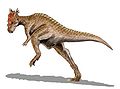
Pachycephalosaur
(Dracorex hogwartsia)
Family: Pachycephalosauridae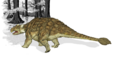
Ankylosaur
Family: Ankylosauridae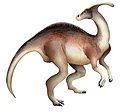
Parasaurolophus
Family: Hadrosauridae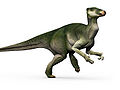
Iguanodon
Family: Iguanodontidae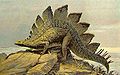
Stegosaurus
Family: Stegosauridae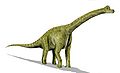
Brachiosaurus
Family: Brachiosauridae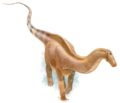
Apatosaurus
Family: Diplodocidae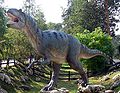
Allosaurus
Family: Allosauridae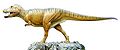
Tyrannosaurus
Family: Tyrannosauridae


| |||||||||||||||||


