Earthworm
| Earthworm |
|---|

|
| Scientific Classification |
|
| Species |
Lumbricus is taxonomic genus of Earthworms. Their cylindrical, invertebrate body can be found all over the world, even in your back yard! Worms are sometimes seen as slimy useless creatures, but God has a very important role for everything he creates. Lumbricus worms are the base of the ecosystem because they are detritivores, meaning they eat dead organic matter. The release of nutrients back into the soil, make Lumbricus very valuable to their environment. Some well-known species in Lumbricus include: Lumbricus rubellus, Lumbricus terrestris, and Lumbricus badensis.
Body Design

Worms in the genus Lumbricus have relative varying sizes from 105mm of the Lumbricus rubellus to 30cm of the Lumbricus terrestris.[2] All worms in Lumbricus are bilateral, meaning they can be cut symmetrically down the back. Organisms in Lumbricus are a part of the vast group of invertebrates. In place of a skeleton’s support, these organisms are filled with coelomic fluid. Their scale less bodies are segmented into annulis. The annulis have no true limbs. Instead, they use muscles to contract longitudinally and setae, or bristles, for friction. About 2/3 down the body length of the worm is where the clitellum is located.[3] The clitellum is a vital part to locomotion because it secretes slimy clear mucus that blankets the worm.
Although it does not visibly have a distinct head, the head is usually darker and more pointed. In the anterior, or head, of the worm is sensory organs and most concentrated nerve cells. Lumbricus worms don’t actually have a true brain. Instead, they have a mass of nervous tissue called ganglia. These sensitive organs detect light and vibrations. This characteristic is called cephalization. Worms have three cell layers- epidermis (the outer most layer), mesoderm, and gastroderm (inner most layer.) The worm’s diet is composed of vegetation, refuse (matter thrown away), decayed animal matter in the soil, and detritus(dead organic matter). It ingests the soil containing food using its muscular sucking pharynx. Like all Lumbricus worms, it has a tubular digestive tract. The food then travels down the esophagus and into the crop. The crop will temporarily store the food and passes it down to the gizzard where it will be ground.
Once the ground food leaves the gizzard, it enters the small intestine where chemical processes take place. The indigestible material is expelled at the anus located at the posterior, or the rear. The digestible nutrients are absorbed into the blood stream and distributed throughout the body. Lumbricus worms have a closed circulatory system which includes vessels containing blood. The vessels discharge nutrients and oxygen to tissues needing the substances. The dorsal(topside) blood vessel is the major vessel to the worm’s circulatory system. It carries blood towards the anterior. On the other hand, the ventral(underside) vessel which carries blood to the posterior. The worm exchanges gas through its thin layers of skin. The gas is then entered into the bloodstream. When the weather is rainy, the worm will surface to the top of the soil to avoid drowning.
Life Cycle

Worms in Lumbricus are hermaphrodites, meaning they have both male and female reproductive parts. At about 6 weeks old, the worm will begin to grow the clitellum about 2/3 down the body where it will contain both reproductive organs. Although Lumbricus worms live primarily underground, they mate on the surface.[4] Even though the worms have both male and female parts, it still requires another worm for reproduction to carry on. In order to reproduce, the worms will align their ventral sides parallel with their heads facing opposite directions. They will exchange sperm where it will be stored in sacs. Their clitellum is secreted in slime to protect the sperm. Once this has been finished, a cocoon like structure will form on the clitellum.[5] A worm can form 2-3 cocoons a week. Approximately 1-5 baby worms, or hatchlings[6], will develop in the cocoon. As soon as the baby worms have developed and the conditions are appropriate, the baby worm will a hatch. At first the baby worms are only half an inch long.
Ecology

Lumbricus worms are found in North America, Europe, and Central Asia. Lumbricus worms are anecic, meaning they make permanent vertical burrows in the soil, or epigeic, meaning they live near the top of the soil among leaf litter. An example of anecic worms is Lumbricus terrestris. An anecic worm’s burrow can be as deep as 3 meters below soil surface and 2cm in diameter. Anecic worm’s tunnels connect vertically and horizontally beneath the surface. The anecic worms will burrow in moist soil where their diet is available.[7] They primarily stay underground but surface for food and during rainstorms. Worms cast on the surface, or convoult a mass of soil, mud, or sand. Their middens (piles of casts) are found closely to their burrow’s entrance. They use their burrow for protection from predators. Lumbricus worms are found in North America, Europe, and Central Asia. An example of epigeic earthworms is the Lumbricus rubellus. Epigeic worms do not burrow.
Invasive

Although earthworms can be found almost all over the world, they may also be invasive to their habitat. Species Lumbricus terrestris and Lumbricus rubellus are invasive to North America but originally from Europe and Asia. They have been known to migrate in soil brought from Europe during the settlement of North America in the 18th century. Considering the small size of Lumbricus worms, they can’t make much of a physical impact to their environment. Instead they effect the nutrient cycle in the soil. The effects upon the nutrient cycle can be beneficial and disruptive. When the worms are first introduced, they break up the organic layer. Due to this, some organisms that depend on the organic layer will be eradicated. Younger plants will die due to nutrient deprivations vital to growing. They benefit their surroundings by breaking down detritus and produce potassium, phosphorus, and nitrogen that are mandatory for the growth of vegetation.[8] As of now, there is no predominant reason to remove the worms from their burrows. Instead scientists monitor and track their expansion. The expansion of Lumbricus worms is slow and steady[9] but can rapidly grow if humans intentionally introduce them.
Video
How to Identify Canadian Nightcrawlers Lumbricus Terrestris
Gallery
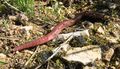
Common-name: Earthworm
(Lumbricus terrestris)
Family: Lumbricidae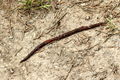
Common-name: Red Earthworm
(Lumbricus rubellus)
Family: Lumbricidae
Common-name:Giant Earthworm
(Lumbricus badensis)
Family: Lumbricidae


References
- ↑ Author unknown. Getting Down and Dirty with Lumbricus terrestris UWL. Web. Accessed on January 27, 2015
- ↑ Lumbricus Wikipedia. Web. Last edited June 2, 2015 unknown author.
- ↑ Earth worms Animal Corner. Publish date unknown. unknown author.
- ↑ Earthworm Wikipedia. Web. February 10, 2016.Unknown author.
- ↑ How do Worms Reproduce and What is Their Life Cycle worm-farming.com. Accessed on February 2, 2016. Author unknown.
- ↑ Yeates, Gregor. Story: Earthworms Te Ara. Web. Last Edited May 21, 2014.
- ↑ Oligochaeta BioKids. Web. Accessed on February 20, 2016. Unknown author.
- ↑ Invasive earthworms of North America Wikipedia. Web. Last modified on February 17, 2016. Unknown author.
- ↑ Earthworms as invasive species Wiki pedia. Web. Last modified on November 19, 2014Unknown author.


