Lemur
| Lemur |
|---|

|
| Scientific Classification |
| Families |
|
Superfamily: Cheirogaleoidea
Superfamily: Lemuroidea
|
| Image Description |
 |
Lemur is the common name for any of the species of primates in the taxonomic infraorder Lemuriformes which was created by God on Day 6 of Creation. The term "lemur" is derived from the Latin word lemures, which means "spirits of the night". This is referring to many lemurs' nocturnal behavior and their large, reflective eyes. Lemurs live only on the island of Madagascar, off the eastern coast of Africa. There were over 50 species of Lemurs but now the forests of Madagascar are being used by people for wood or land, so there are only about 30 species left, 14 have become extinct. [1] They are also hunted and trapped to be used as pets, traded, or as food. Lemurs are social animals and although they spend most of their time in trees and bushes, the ring-tailed lemur spends half of its day on the ground. In the mornings they usually sunbathe for warmth. Lemurs eat leaves and fruits, although they will sometimes eat insects or smaller animals. Lemurs communicate vocally and through scents. A group of lemurs usually has one female who leads the group. [2]
Anatomy

Most of the Lemurs have long pointed noses, and they vary in colors from reddish brown to gray. The main specie of the Lemurs is the Ring-tailed lemur, named that because their tails look like they have black and white rings on them. Lemurs vary in size[3] and have four legs and a tail. Like monkeys, they have long toes and fingers for holding things. They can tell if another lemur has been around by smell. They can't see color very well but their sense of smell is very acute. Lemurs have scent glands on the bottom of their feet so when they walk other lemurs can smell their trail. [4]
Size: Head and body, 17.75 in (45 cm); Tail, 21.75 in (55 cm)
Reproduction

Lemurs usually breed in the fall and go into labor in the spring. Most of the births take place at night and labor takes about half an hour (the time it takes between infants is usually 10 minutes). They often give birth to twins and females can nurse up to six infants at the same time. The mother will carry the baby lemur around in her mouth, until it has enough strength to hold onto her fur. [5]
Ecology
Lemurs in Madagascar and the Comores Islands broadcast seeds from the fruit and other foods they eat, which then will likely grow into new plants. This is useful since the forests in Madagascar are being destroyed. Eighty percent of the lemur's original habitat in Madagascar has been destroyed. All lemurs are protected by CITES, which makes it illegal to hunt or capture lemurs for trade, except for science research and for breeding in zoos.
Miscellaneous
- Most lemurs live for about 18 years.
- Ruffed lemurs can live 26 years in captivity.
- Lemurs cannot hang by their tails from trees like monkeys.
- Lemurs have a keen sense of smell and good vision.
- Lemurs have opposable thumbs and long toes.
Gallery
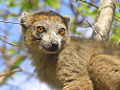
Crowned Lemur
(Eulemur coronatus)
Family: Lemuridae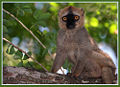
Brown Lemur
(Lemur mongoz)
Family: Lemuridae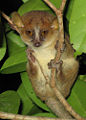
Golden-brown Mouse Lemur
(Microcebus ravelobensis)
Family: Cheirogaleidae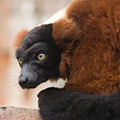
Red-Ruffed Lemur
(Varecia rubra)
Family: Lemuridae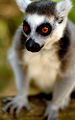
Ring-tailed lemur
(Lemur catta)
Family: Lemuridae


References
- Lemurs by Lezle Williams.
- Lemur facts By Madhavi Ghare, published: 1/28/2008
- Lemurs Smithsonian National Zoological Parks
- WildMadagascar: Lemurs of Madagascar Madagascar


